


Contact our offices
Main office
COLBURN
5 & 6 BAILEY COURT
COLBURN BUSINESS PARK
RICHMOND
NORTH YORKSHIRE
DL9 4QL
Estate Agency Offices are located in
BOROUGHBRIDGE & RICHMOND
Residential Management Team
Our Offices
- Alnwick
01665 568310
Email Officealnwick@gscgrays.co.uk - Boroughbridge
01423 590500
Email Officeboroughbridge@gscgrays.co.uk - Chester-Le-Street
0191 3039540
Email Officechester-le-street@gscgrays.co.uk - Colburn
01748 897630
Email Officecolburn@gscgrays.co.uk - Driffield
01377 337180
Email Officedriffield@gscgrays.co.uk - Hamsterley
01388 487000
Email Officehamsterley@gscgrays.co.uk - Hexham
01434 611565
Email Officehexham@gscgrays.co.uk - Kirkby Lonsdale
01524 880320
Email Officekirkbylonsdale@gscgrays.co.uk - Penrith
01768 597005
Email Officepenrith@gscgrays.co.uk

Why landowners should take a fresh look at planning potential
The National Planning Policy Framework (NPPF) was updated last month, introducing a number of changes to national planning policy in England. While this doesn’t mean agricultural land is now generally available for development, it does provide a good reason for farmers and landowners to reconsider planning advice given some years ago.
For some sites and buildings, the planning context may have changed. The revised Framework provides clearer support for certain forms of development outside settlements, as well as agricultural and rural businesses, the reuse of existing buildings and development in locations well connected to public transport.
The NPPF has long supported the rural economy, agricultural diversification and the sustainable growth of rural businesses, but the revised Framework places greater emphasis on farming, food production, farm resilience and investment in rural enterprises.
That could strengthen the case for proposals to modernise farm infrastructure, construct new agricultural buildings, expand rural businesses, diversify into tourism, leisure or other enterprises, or reuse and adapt existing farm buildings.
The Government has also highlighted the importance of farm infrastructure, including reservoirs and measures to improve water resilience, recognising the need for agriculture to respond to changing environmental pressures.
The revised Framework also places greater emphasis on farm resilience and investment in agricultural businesses, recognising the need for farms to adapt to changing economic, environmental and operational pressures and supporting projects that improve the long-term sustainability of rural enterprises.
One of the most relevant changes for rural landowners is the clearer approach to development outside settlements. The revised NPPF provides stronger support in principle for countryside development, including agriculture, forestry, horticulture, rural businesses, tourism, building conversions and the redevelopment of previously developed land.
That doesn’t mean all countryside development will be acceptable. Access, landscape, ecology, flooding, heritage and infrastructure will remain important considerations and every site must still be assessed on its merits.
However, landowners shouldn’t assume a site has no planning potential simply because it lies outside a settlement boundary. Land containing existing buildings, farmyards or previously developed areas may now justify a fresh assessment.
The revised NPPF takes a more consistent national approach to defining settlements and assessing development within and outside them.
For landowners with sites on the edge of villages or within walking distance of well-connected railway stations, this may create opportunities that previously faced greater policy obstacles.
It also builds on Green Belt reforms introduced in December 2024, including the concept of ‘Grey Belt’ land. While this does not mean Green Belt land can simply be developed, some sites may warrant closer examination, particularly where they contain previously developed land or are in sustainable locations.
Another important factor is the relationship between the revised NPPF and existing Local Plan policies. This could be particularly significant where previous planning advice relied on a Local Plan policy which is now out of step with national policy. Advice received several years ago should not necessarily be regarded as the final word on a site’s prospects.
Local Plans remain fundamental to the planning system, but changes at national level can alter the balance of considerations for individual sites.
A fresh review may therefore be worthwhile for landowners with redundant agricultural buildings, farmyards, land within or adjoining settlements, sites near railway stations, Green Belt land or planning advice that has not been revisited for several years.
The new NPPF does not make all rural land developable, but it may have changed the planning position of some sites enough to justify a fresh review. For some holdings, that review may identify opportunities previously overlooked.



GSC Grays News
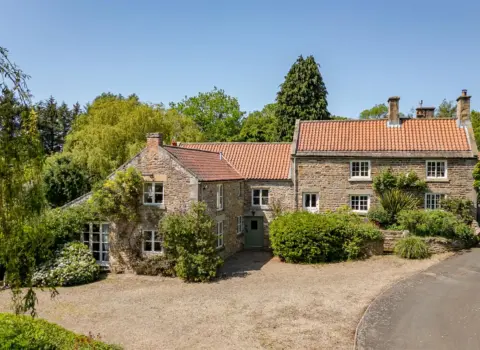
Historic North Yorkshire mill combines country living with excellent equestrian facilities
Read more
Client Feedback
We have had the pleasure of serving a variety of clients...
We received excellent service and were well informed at each stage of the process. We were pleasantly surprised when Kate whooped down the phone when she received the key for Golden Lion Mews! We would have no hesitation in giving you and the team 5 stars for service.
Mr and Mrs Marron
Client Feedback
We have had the pleasure of serving a variety of clients...
GSC Grays provide an experienced and professional service. From the initial contact with the valuer (Graham Wood) to the closure of the sale they keep you informed throughout. Graham and all of the staff are a pleasure to deal with. I would highly recommend them. I would also give you a 5 star rating.
Marian Lowe
Client Feedback
We have had the pleasure of serving a variety of clients...
I unhesitatingly recommend Gray’s Estate Agent in Barnard Castle. We explored a number of agents and chose GSC Grays not because they were the cheapest but because they most inspired our confidence. We were not disappointed; from the initial visit through various stages to completion we were impressed by the professionalism, attention to detail, excellent communication, competent negotiation, and willingness to go the extra mile in customer service. They facilitated the sale of our property in a way that made it feel a pleasure to sell.
H. Thorp
Client Feedback
We have had the pleasure of serving a variety of clients...
We have moved house several times over the years so feel well qualified to recognise good efficient service when we see it. All the way through, from the initial valuation to the day of completion, everyone at GSC Grays made us feel our sale really mattered. We were kept well informed of the progress of the sale and any questions we had were answered promptly and clearly. We would definitely recommend GSC Grays to anyone planning to buy or sell a property.
M. Scarborough
Client Feedback
We have had the pleasure of serving a variety of clients...
Thank you once again for the excellent care you have taken of us during the sale and now the purchase of our house. We have felt all along that you really cared and were really interested. A wonderful service.
A. Merck
Client Feedback
We have had the pleasure of serving a variety of clients...
Thank you for all your help during our move. It all got quite stressful towards the end and it was great to have you at the end of the phone offering reassurance and advice. We got there in the end and we are delighted with our new home! Just wanted to let you know how much your help was appreciated!
Katy
Client Feedback
We have had the pleasure of serving a variety of clients...
I just wanted to pass on my appreciation to the whole team for the fantastic job they did for me. The Sales Progression team had a particularly tricky job as the sale was less than easy but they were all amazing.
G.F
Client Feedback
We have had the pleasure of serving a variety of clients...
GSC Grays were recommended to me and in the years which I have worked with them, I have found their approach excellent. They take a long term view and provide exactly the right balance between pushing things on whilst keeping me informed – I am delighted to have them on board.
C.C
Client Feedback
We have had the pleasure of serving a variety of clients...
Excellent HomeBuyer Report service. Survey completed promptly and initial comments delivered by telephone within twenty-four hours with comprehensive written report received by post shortly after. Clear, concise documentation, which includes advice on rectifying defects and issues that legal advisors may wish to investigate, all professionally presented in a bound booklet enabling a timely informed decision to be achieved in respect of the purchase of the property. Thoroughly recommended.
A. Longstaff
Client Feedback
We have had the pleasure of serving a variety of clients...
GSC Grays have always provided a professional and friendly letting service for me. Their regular updates and communication have meant total peace of mind that my properties are being managed with the up most of care. I would definitely recommend GSC Grays to other landlords.
M.M
Client Feedback
We have had the pleasure of serving a variety of clients...
When your largest cost in selling/purchasing a new house is the estate agent fees it is a rather large cost to accept, especially with things like Rightmove been involved. However, once my sale was agreed and it was passed over to Catherine in the sales progression team I do believe the fee was easier to stomach as her role in the sale/purchase was worth its weight in gold, and without it, there is no doubt in my mind that things would have not got done in the timescales we and our seller wanted. I really do appreciate all of Catherine’s advice and help in keeping the whole process moving.
E. Sword
Lycetts
Client Feedback
We have had the pleasure of serving a variety of clients...
Thank you so much to the Barnard Castle Branch and the Sales Progression team for all your help with the purchase of our new home. We are absolutely delighted with the property and were really impressed by the service and experience we had at GSC Grays.
H. Langford
Client Feedback
We have had the pleasure of serving a variety of clients...
Thank you to everyone at GSC Grays for your friendly professionalism over the past two years and especially in more recent weeks. I greatly appreciated all you do and would have no hesitation in recommending you to anyone!
J.N
Client Feedback
We have had the pleasure of serving a variety of clients...
GSC Grays were recommended to me and in the years in which I have worked with them, I have found their approach excellent. They take a long term view and provide exactly the right balance between pushing things on whilst keeping me informed – I am delighted to have them on board.
A.N
Client Feedback
We have had the pleasure of serving a variety of clients...
Theakston Land has worked with Calum and his team for many years. That work has included a detailed analysis of costs to maximise value. The development appraisal work undertaken with GCS Grays means that I am confident we are getting the best possible price. They make a positive contribution at all levels and help to drive forward long term and complex development projects.
S Marlow
Theakston Land
Client Feedback
We have had the pleasure of serving a variety of clients...
During 2020 Holly Story has worked on Barningham Estate helping us in our understanding of Natural Capital assets. Holly was instrumental in Barningham’s successful ELMs Test and Trial bid and is leading in the bid’s implementation. Her understanding and thought leadership are helping to bring clarity and good sense to what seems an increasingly complicated agricultural world.
Sir Edward Milbank
Barningham Estate
Client Feedback
We have had the pleasure of serving a variety of clients...
We have been working with GSC Grays Farm Business team since 2018 and with Robert Sullivan for over 20 years. The advice and insight of the team has been invaluable and means that we are now in a much stronger position to face the future and the changes in the industry with confidence. Their passion and commitment to us and the farm is integral to our success.
T. Dent
Dinsdale Farming Ltd.
Client Feedback
We have had the pleasure of serving a variety of clients...
We could not have chosen a better estate agent. Excellent work from start to finish from all the well-motivated professionals with whom we came into contact. The house was well marketed, and communications were superb, we were always kept well informed.
Mrs A





© COPYRIGHT GSC GRAYS LIMITED
TRADING AS GSC GRAYS (ENGLAND AND WALES). COMPANY REGISTRATION NUMBER: 07715034.
REGISTERED OFFICE ADDRESS:
1 BAILEY COURT, COLBURN BUSINESS PARK, RICHMOND, NORTH YORKSHIRE DL9 4QL

Contact our offices
Main office
COLBURN
5 & 6 BAILEY COURT
COLBURN BUSINESS PARK
RICHMOND
NORTH YORKSHIRE
DL9 4QL
Estate Agency Offices are located in...
BOROUGHBRIDGE & RICHMOND
Residential Management Team
Our Offices
- Alnwick
01665 568310
alnwick@gscgrays.co.uk - Boroughbridge
01423 590500
boroughbridge@gscgrays.co.uk - Chester-Le-Street
0191 3039540
chester-le-street@gscgrays.co.uk - Colburn
01748 897630
colburn@gscgrays.co.uk - Driffield
01377 337180
driffield@gscgrays.co.uk - Hamsterley
01388 487000
hamsterley@gscgrays.co.uk - Hexham
01434 611565
hexham@gscgrays.co.uk - Kirkby Lonsdale
01524 880320
kirkbylonsdale@gscgrays.co.uk - Penrith
01768 597005
penrith@gscgrays.co.uk
Or please fill in your details below and one of our team will get back to you as soon as possible.